

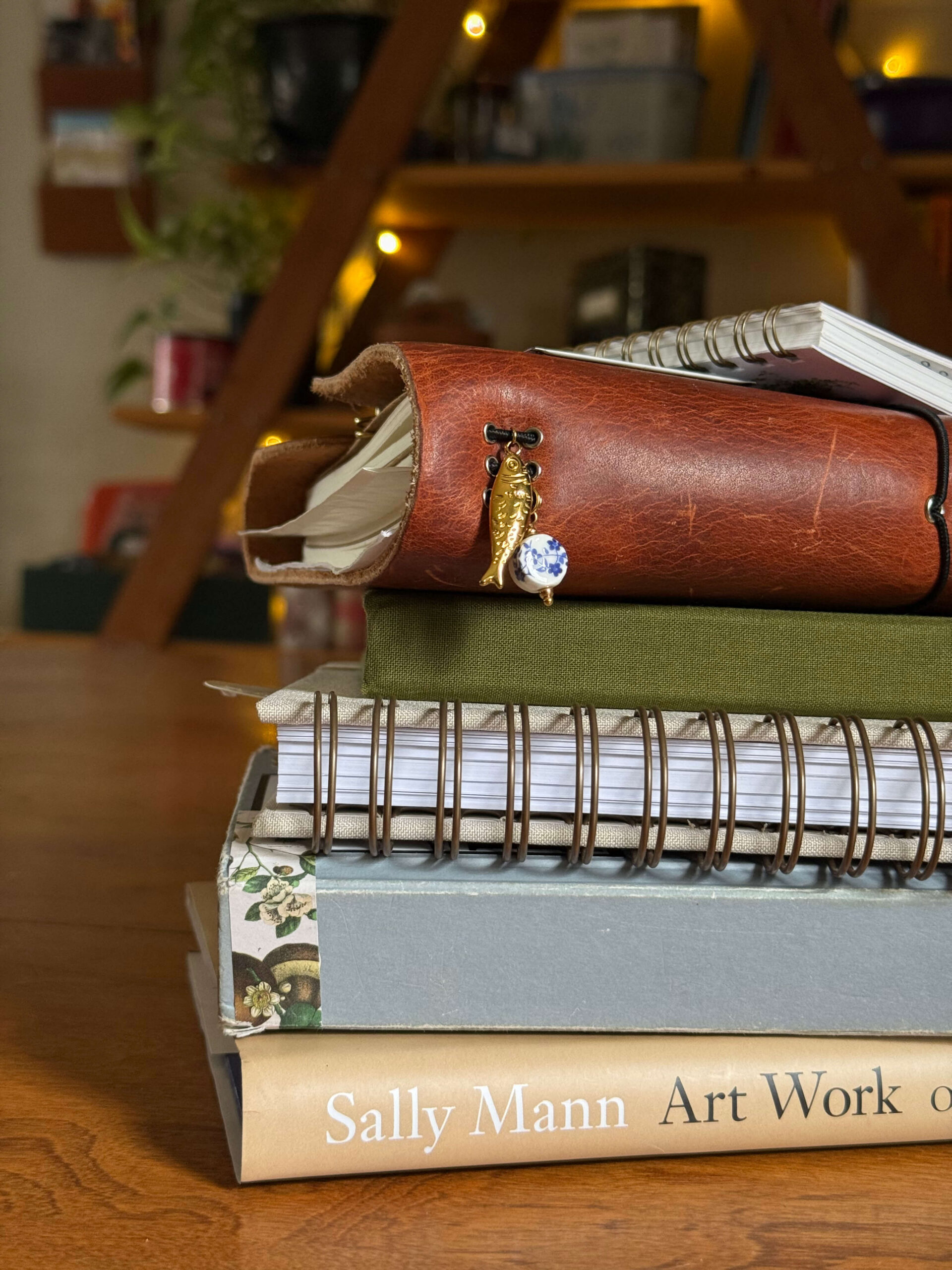

I didn’t mean to do it all at once. But if you know anything about me, you know I’m a 0-120 kind of girl.
It started as friction. Tiny places where things that used to feel simple started to feel a little too loud. A little too scattered. A little too easy to lose.
My attention felt like it was living in too many tabs too many apps. My work felt like it was happening in too many places at once. And my life—honestly—started to feel like something I was constantly trying to track down instead of actually living in.
So I shifted everything (and talked about it here). I deleted Google Calendar from my phone. I moved my client organization from three separate places on my computer to one notebook, traded late-night scrolling for knitting needles, copied all 100+ addresses from three different Google Sheets to an Etsy address book, and stopped tracking down one-off thoughts in my notes app.
Six months later, I can tell you this isn’t about becoming more productive or more organized. It’s about how my attention feels again. Like something I can actually hold.
Here’s what changed.
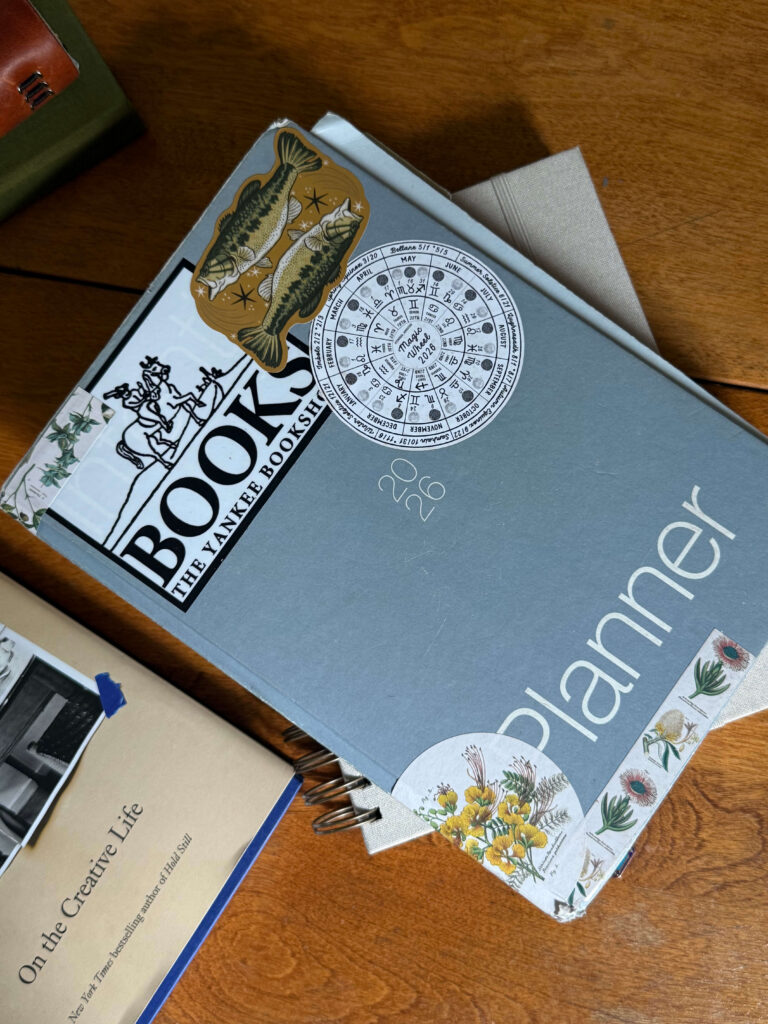
1. I moved my calendar to paper (yes, they still make those)
I didn’t expect this to matter as much as it does. I thought it would just be… a cute switch? Maybe slightly more aesthetic? Definitely less “efficient,” but doable in a romanticized kind of way.
What it actually did was change how I understand my capacity as a Vermont family photographer and as a mother [read: CEO of my family].
Google Calendar is very convincing. Everything looks like it fits. Everything looks possible. You can stack and overlap and compress your way into believing a day can hold more than it actually can.
A paper calendar doesn’t do that. A square is a square. Suddenly, I could see it: this day already holds one, maybe two things. That’s not empty space. That’s full.
It has made me better at saying yes when I actually have room. Better at saying no without spiraling into explanation. Better at suggesting alternative dates for clients and friends without that internal scramble of “wait… am I already overbooked?”
There’s also something about the delay that has been quietly life-changing. Someone asks for my time, and I can’t immediately respond from my phone brain. I have to wait until I’m home. Open the planner. Look at my actual life laid out in front of me. See everything else going on, and make a slower [read: more intentional] decision about my mental and physical capacity.
That pause alone has changed how I make decisions.
2. I bought a notebook I’m (more than) slightly obsessed with
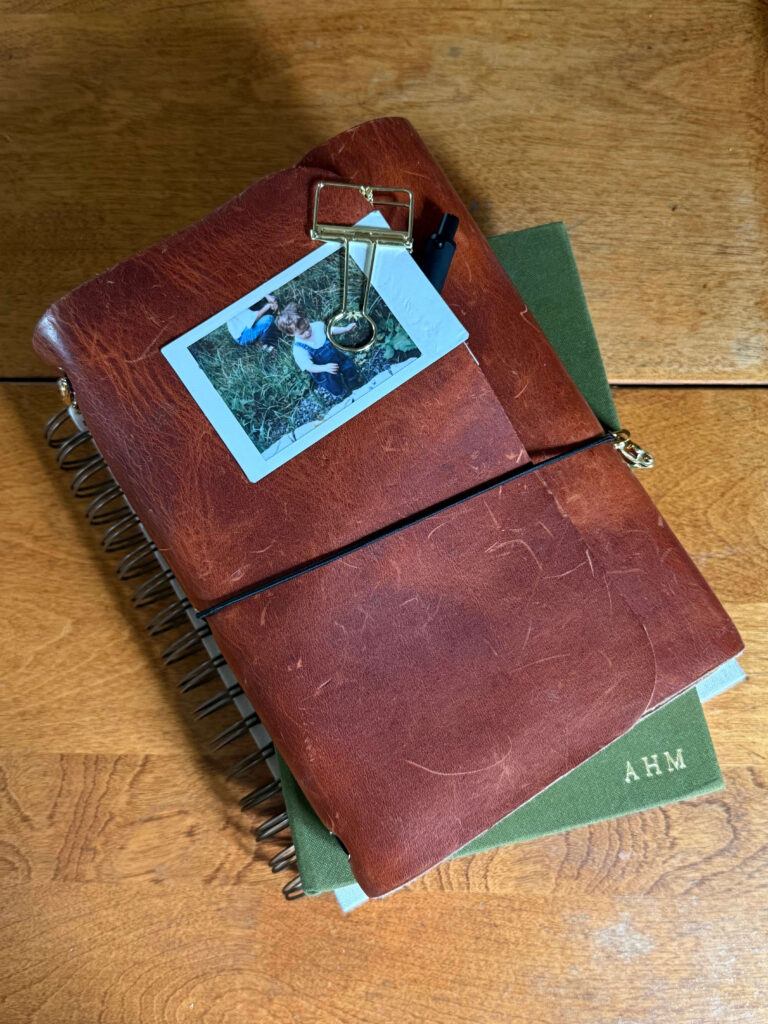
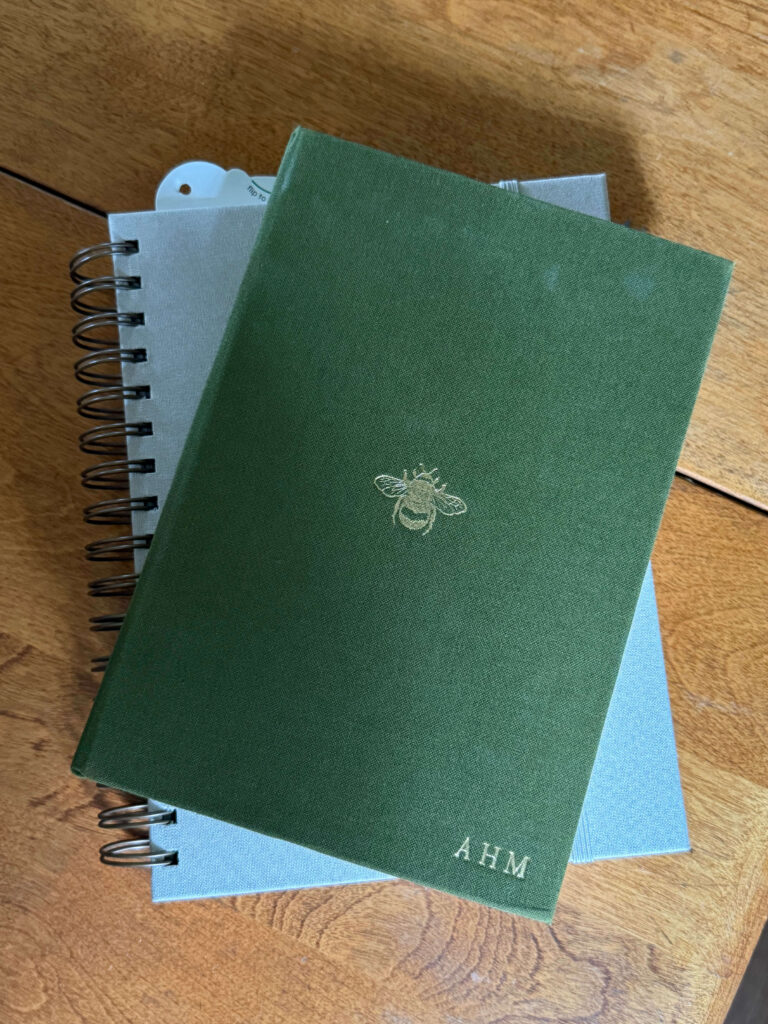
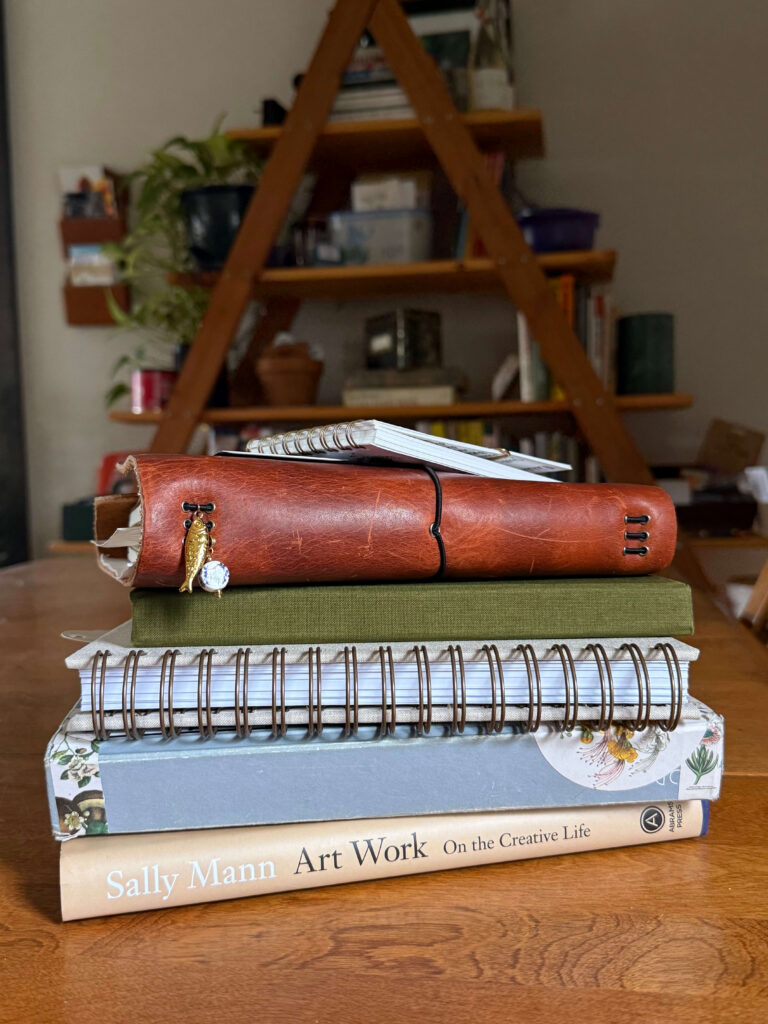
This one, to be exact. (personalized charms? are you kidding me?) And, it’s become one of the most important shifts.
Ideas for work. Thoughts that show up mid-day. Things I don’t want to forget about my life, something my son said that I want to remember, business ideas, scraps of things I read and want to hold onto, or just the way something felt in a passing moment.
Before this, everything lived in fragments. Notes app. Half-written drafts. Random text messages to myself. Mental tabs I swore I’d come back to. [spoiler: I didn’t.]
Now it lives in one place.
And that alone has made my thinking feel calmer. Less scattered. Less like I’m constantly trying to remember what I’ve already thought. It’s not about being more organized. It’s about not losing myself in the noise of a thousand digital corners.
3. I started tracking my plants in a herbarium
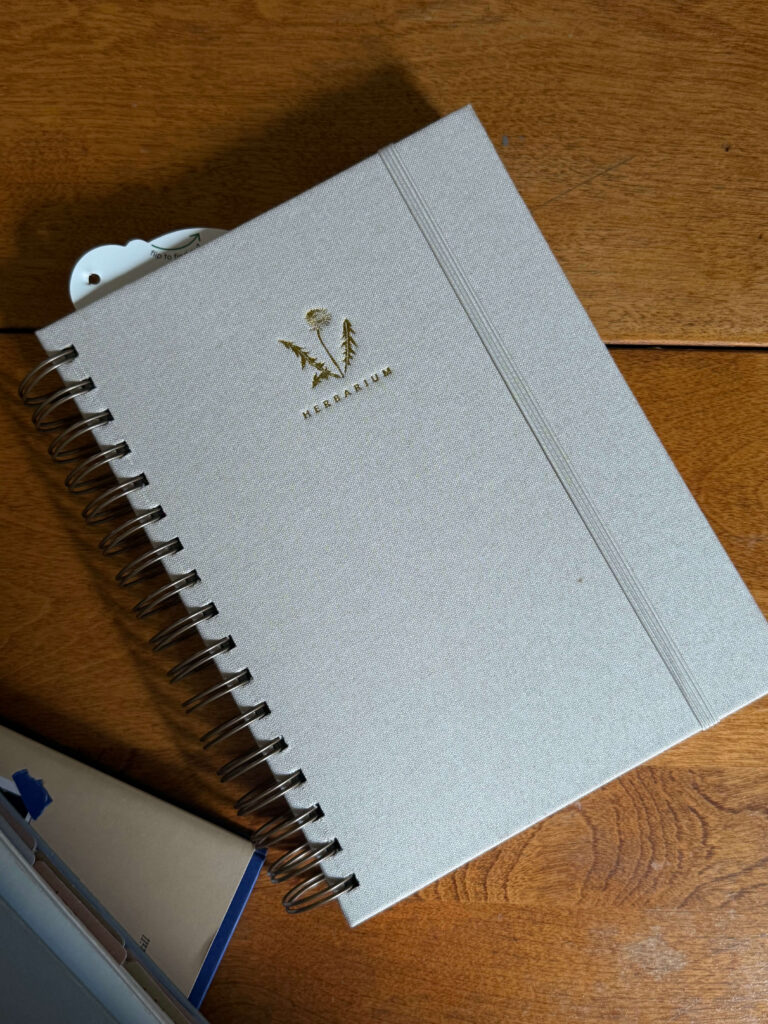
This one sounds a little eccentric, but it has grounded me more than I expected and it honestly all started from an adorable notebook I probably didn’t need but definitely wanted.
I started keeping track of my plants (and our new fruit trees)—what I planted, where I planted it, what’s thriving, what I moved, what didn’t work, and what I want to try next.
Not in a perfect system. Just a quiet record of what’s happening over time.
It slows me down in a way I didn’t realize I needed. It asks me to notice things I would normally rush past:
what changed since last week, what actually survived, what did I put outside too early (sorry, Mr. Fiddle Leaf), what I thought would work but didn’t.
It’s become less about plants and more about paying attention to life’s cycles and rhythms. Less urgency. More noticing.
4. I moved all my contacts into a physical address book
This one felt almost unnecessary until it suddenly wasn’t.
My contacts used to live eve.ry.where—Google Docs (yes, plural), phone, emails, sticky notes, half-remembered names I knew I had saved somewhere. So I moved them into a physical address book. One place. One system. No searching across five platforms to find someone’s information.
It feels steadier. Less like I’m relying on memory or technology to hold relationships for me. More like I’m participating in them on purpose. (Plus, trusting that I always have the most updated address will certainly make holiday cards easier this year).
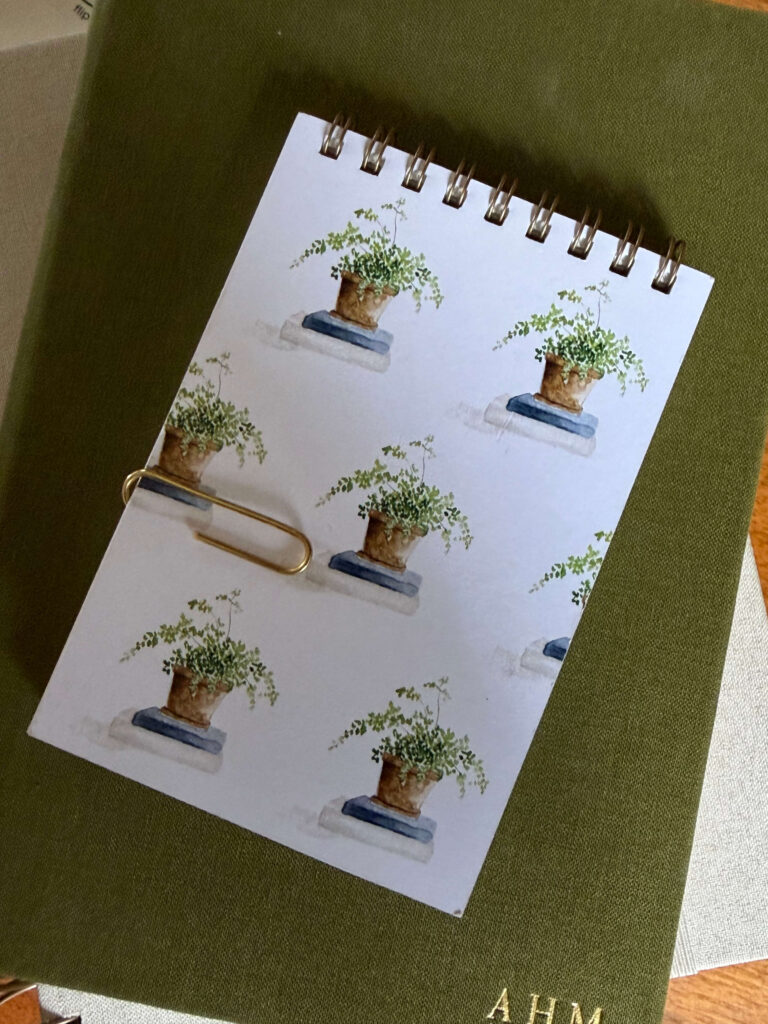
5. I started tracking client work in a small ringed notebook
This one is unglamorous, but it might just be the thing that holds my entire business together.
I keep a small ringed notebook just for client work.
Not ideas. Not inspiration. Just people.
Because each Vermont family session I photograph has so many moving pieces that unfold over time:
Story canvases.
Session plans.
Editing timelines.
Gallery delivery.
Film scans going out and coming in.
Super 8 film processing and editing.
Thank you notes and Keepsake Kits.
Album design.
Testimonial follow-ups weeks later.
When you’re holding that many layered experiences at once, it’s easy for something to slip if everything lives in different digital places. Nothing had yet, but I could feel it coming.
So now I write it down. Each client has a page. A space. A running note of where they are in the process and things I want and need to remember.
And I can physically flip through and see who is waiting on film, who still needs a thank-you gift, who I owe a follow-up to, who I want to check in on because their session still sits with me.
It’s simple, but it’s changed how I show up.
Less mental clutter.
Less fear of forgetting something important.
More presence with each person I work with.
Not because I’m doing more. Because I’m holding it differently.
6. I keep recipes in an actual recipe box
This one might be my favorite.
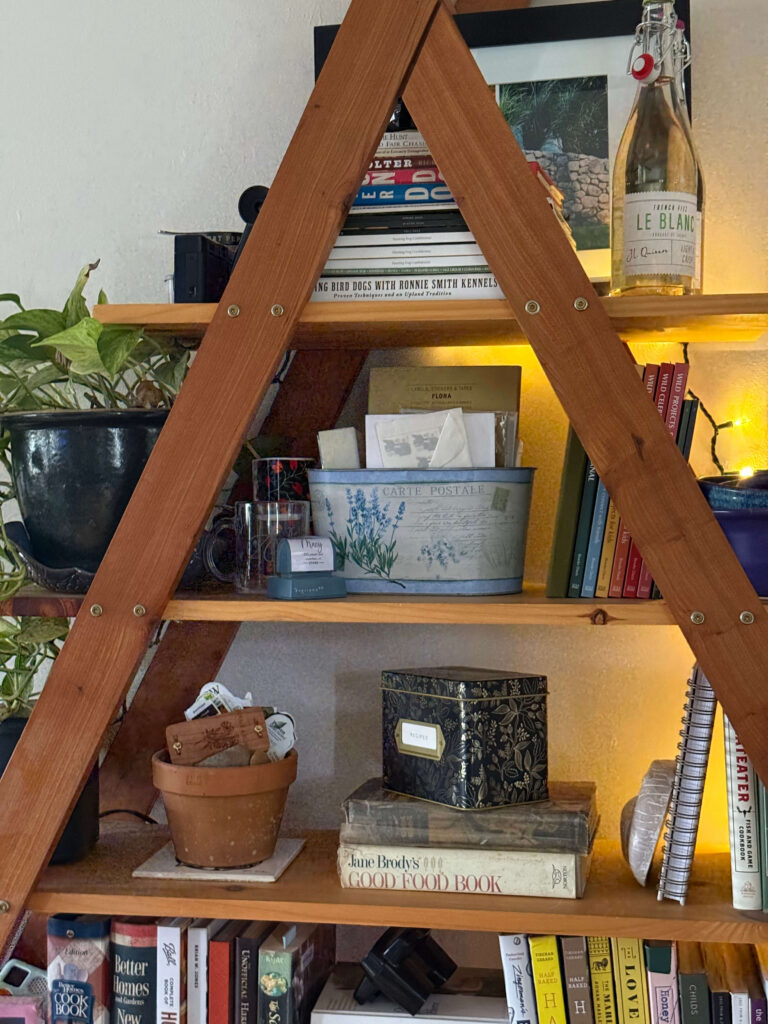
I still look up recipes online, and my New York Times Cooking subscription is still my most-used subscription (outside of photography ones, obviously)—especially when I have random ingredients I need to use or I’m trying something new. But if a recipe becomes a keeper, it goes into the recipe box.
And somewhere along the way, it stopped becoming just a place to store food ideas and turned into something much bigger.
Some of the recipes are handwritten: my mom’s, my sister’s, my grandmas’, even one from my great-great grandma.
Some are stained or folded or written on yellowing index cards that have clearly lived a full life before getting to me. And tucked between recipe cards are other little pieces of history: old photos, notes, tiny things I made as a kid that my mom held onto all these years, the first “H” Henry ever wrote.
It’s become less of a recipe system and more of a living archive. A box full of proof that life keeps layering itself into ordinary things. Honestly, it’s one of the only things in my house that I know I’d grab in a fire.
Not because of the recipes themselves, but because of the people inside it.
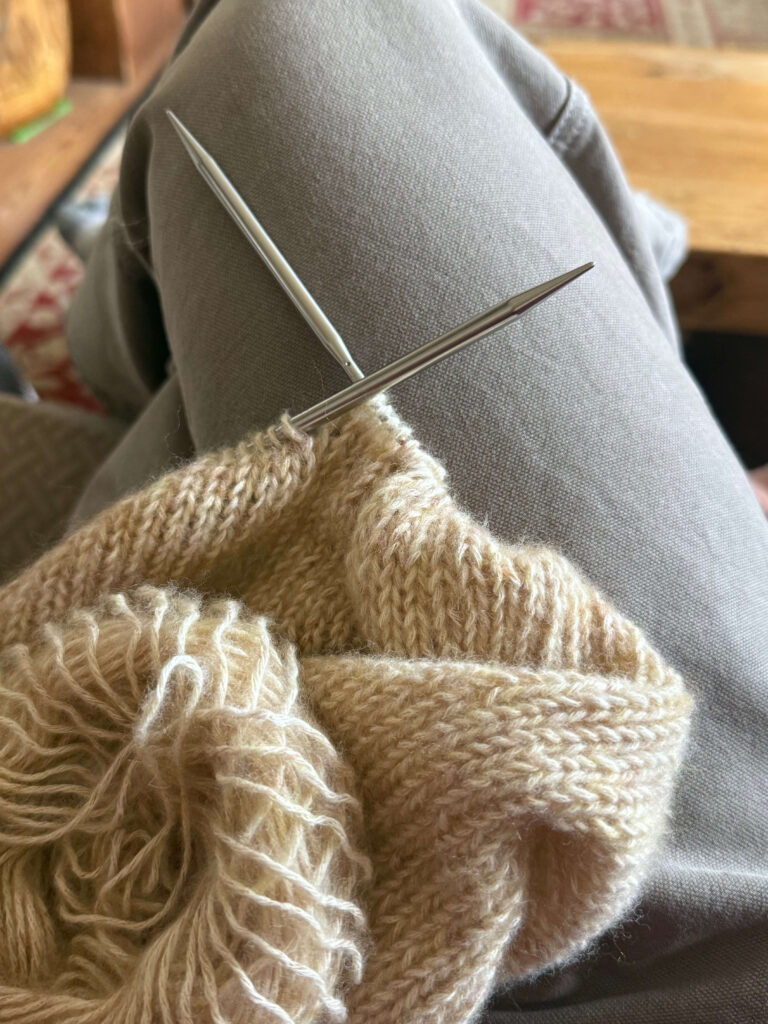
7. I’m knitting at night instead of scrolling
This one is still a work in progress.
Some nights I choose it. Some nights I don’t (oh hello, busy-season editing). Some nights, Henry needs a little extra help settling, and I hop [read: dissolve] right into bed after he’s out.
But the intention has shifted something already.
Instead of defaulting to my phone at the end of the day, I’ve been trying to choose something slower. Something that keeps my hands busy and my brain from staying “on” (and keeps my eyes from feeling like they’re burning out of my skull).
Knitting; letting the day end without replacing it with more input.
The phone is easy. It’s reflex. It’s habit. But on the nights I don’t scroll, I can feel the difference almost immediately. My mind feels less jagged. Less overstimulated. Less like it’s still processing a thousand things at once.
This is the hardest shift for me.
But also maybe the most important one.
So what’s actually changed?
Not everything.
My life is still full. Still busy. Still very much real and messy and moving all the time.
But the texture of it has changed.
There’s more slowness where there used to be urgency. More clarity where there used to be noise. More space between what happens and how I respond to it.
And I think that’s the part I didn’t expect:
Going more analog didn’t simplify my life. It made it feel like mine again.


+ Show Comments
- Hide Comments
add a comment